Turn It Up, Pay Them Right: The Hidden Labour Keeping UK Underground Gigs Alive
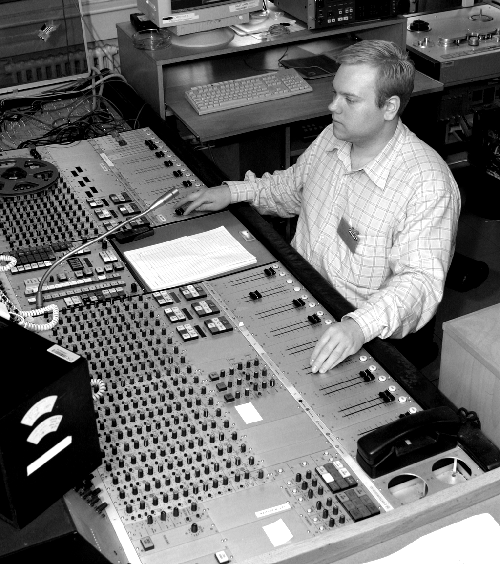
Photo: Unknown, CC BY-SA 3.0, via Wikimedia Commons
Walk into a 120-cap room in Leeds on a Thursday and you can usually spot the sound engineer before the band. They are the one by the fire exit, crouched behind a desk that looks like it lost a fight with a car boot sale, untangling a decade of XLR cables while someone asks if they can plug a phone in. By 9pm they have already done three jobs: system tech, monitor engineer and front-of-house. By 10pm they are the only reason the vocal is not disappearing into a dry cymbal wash.
This is the invisible labour of the UK underground in 2026. We talk a lot about DIY ethics, fair door splits and paying bands. We talk less about the person who arrived at 4pm to find one working monitor wedge, a house PA held together with gaffer tape and a promoter who says the last sound engineer 'just turned things up until it stopped feedbacking'. That person is not a luxury. They are the difference between a room that sounds alive and a room that sounds like a washing machine full of cutlery.
The desk is not a plug-and-play
A DIY venue is not a studio. It is a back room with a low ceiling, a stubborn radiator and a neighbour who has already phoned the council twice. The sound engineer is expected to make a five-band bill work in a space designed for pub quizzes and wedding receptions. They are balancing vocals against a drummer who has brought a kit built for a 500-cap venue, a guitarist with a new fuzz pedal and a singer who cannot hear themselves because the monitor is blown.
Good sound is not magic. It is preparation, decent gear and someone who knows the room. But preparation costs time, and gear costs money. When a night cannot afford either, the engineer becomes the human shock absorber for every bad cable, every missing DI box and every band that turns up with a broken amp and a hopeful expression. They are not the sixth member of the band. They are the reason the sixth member can be heard.
The economics of a fiver
Underground gigs run on thin margins. A tenner on the door, a five-band bill, a split that barely covers fuel and a promoter who is doing this after a shift. It is easy to see why sound gets pushed to the bottom of the spreadsheet. But if a night cannot afford a sound engineer, it cannot afford to call itself a gig. It can call itself a rehearsal with an audience.
Fair pay does not have to mean West End rates. It means a named fee agreed in advance, not a whip-round at the end. It means factoring sound into the budget before the poster goes up, not after the door count. It means not expecting someone to bring £2,000 of their own gear, skip the support bands' soundcheck and then accept a score, a pint and a pat on the back. A sound engineer who is paid properly is a sound engineer who can afford to turn up early, stay late and care about the room.
Technical standards are not rock star demands
Basic standards are not diva behaviour. They are the bare minimum. A working PA. Enough mics for the kit. Monitors that do not sound like a walkie-talkie in a bin. A line check before doors. A contact sheet that says who is running the night. A stage plan that does not rely on telepathy. These things are not glamorous, but they are the infrastructure of a scene.
Bands have a part to play too. Bring working cables. Label your DI boxes. Do not turn up with a mysterious buzz and expect the desk to fix it with a magic button. Promoters should publish a simple tech spec and stick to it. Venues should stop treating sound as a favour from the bloke who knows where the amp goes. The underground is supposed to be scrappy, not slapdash. There is a difference between making do and taking the piss.
Respect is a two-way channel
The desk is not a jukebox. Shouting 'turn it up' at the engineer mid-song does not make the vocal louder; it just makes you the person everyone remembers for the wrong reason. Cupping the mic, standing in front of the speaker and demanding more monitor halfway through a set are all ways of making a hard job harder. If something sounds off, tell the band after the set. Let the person behind the desk do the job they were hired to do.
Audience respect also means understanding that a good mix is not the same as a loud mix. The best underground gigs are not the ones that leave your ears ringing for three days. They are the ones where you can hear the snare, the lyric and the bit of feedback that was supposed to be there. That takes someone listening, not just someone turning knobs.
What a better night sounds like
Pay the engineer. Publish a tech spec. Give them a break between bands. Feed them something that is not a packet of crisps. Let them soundcheck the support act instead of treating the first band as a live line check. Build ten minutes of reset time into the bill. And when the night is over, thank them properly. Not because they are a hero, but because they are a worker.
The UK underground does not need more mythology about suffering for the art. It needs basic professionalism wrapped in a scruffy jacket. No gods, no masters, just loud UK underground — and loud only works if someone is listening behind the faders.