The Last Unmediated Tenner: In Defence of the Cash Door
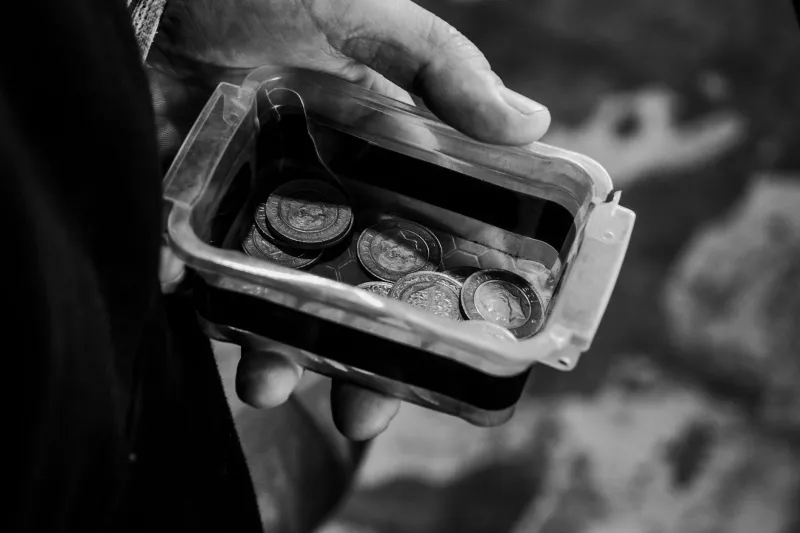
There’s a particular sound that still means something in the UK underground: a promoter cracking open a tin, counting out change on a pub table, and asking your name so they can tick it off a piece of paper. It’s not glamorous. It’s not scalable. But it’s one of the last parts of a night out that hasn’t been turned into a funnel.
In 2026, buying a ticket for almost anything means a booking fee, a service charge, an account, an app, and a confirmation email that arrives before you’ve decided whether you actually fancy going. Dynamic pricing has crept from arena shows into smaller rooms. Data gets hoovered up. The transaction happens on someone else’s platform, under someone else’s terms. The cash door is the opposite of that. It’s immediate, it’s local, and it asks for nothing but the money and your name.
That doesn’t make it perfect. But it does make it worth defending.
The door as a handshake, not a funnel
When a grassroots promoter takes cash on the door, the money goes from your hand to theirs. There’s no merchant processor taking a slice, no ticket platform holding funds for a week, no algorithm deciding which nights get promoted. The band gets paid. The venue gets its cut. The promoter might just about cover the flyers. Everyone knows where they stand.
That immediacy matters for DIY economics. A tenner at the door is a tenner in the room. It can pay for the support act’s fuel, or the PA hire, or the emergency replacement kick pedal. It can be split on the night, in cash, without an invoice or a payout schedule. For bands playing to forty people in a back room, that’s not a small thing. It’s the whole thing.
The cash door also keeps the barrier low. You don’t need a bank account, a smartphone, or a credit card to get in. You need a tenner. That’s a genuinely accessible model — more accessible, in some ways, than a pre-sale system that assumes everyone has the same digital tools and the same willingness to hand over personal data for the privilege of standing near a stage.
What the platform takes
It’s easy to forget how much of the ticket price disappears before it reaches the people making the noise. Booking fees, per-ticket charges, payment processing, and sometimes a venue cut on top. For a small night, those percentages can be the difference between breaking even and losing money. Card readers at the door aren’t free either — they take a cut, they need a signal, and they can fail at exactly the wrong moment.
Then there’s the data. Buying a ticket online often means signing up, agreeing to terms, and joining a mailing list you didn’t really ask for. The underground has always run on word of mouth — a flyer, a text, a mate saying “you need to be at this”. Shifting that to a platform means the relationship between promoter and crowd becomes mediated by a company that has no stake in the scene. The night becomes a transaction on someone else’s platform. That’s a quiet loss, but a real one.
The risks we pretend away
Defending the cash door doesn’t mean pretending it’s risk-free. Cash gets lost. Floats go missing. Promoters get stuck with a tin of coins at 1am. Guest lists get messy when three different people are working the door and none of them have the same version of the list. No-shows hurt when you’ve turned away paying customers because the room was “full” on paper.
And not everyone carries cash in 2026. That’s a real accessibility issue. A cash-only door can exclude people who rely on cards, and it can make the night feel cliquey if you’re the one who has to find a cashpoint. There are also legal and tax considerations — cash handling needs care, and promoters should be keeping records whether they’re taking notes or not.
So the answer isn’t to romanticise the tin and ignore the problems. It’s to be honest about them and design around them. A hybrid door — cash preferred, card accepted — is often the most practical solution. A clear, written guest list. A visible price. A promoter who knows how to count. These aren’t betrayals of DIY ethics; they’re the boring admin that keeps DIY ethics running.
The guest list is a social contract
There’s something else the cash door preserves: the guest list as a social document rather than a CRM. A paper list with names crossed out is a record of trust. It says this person is playing, this person is helping, this person is a mate of the band, this person is reviewing the night. It’s messy and imperfect, but it’s human.
When every list becomes a database, the relationship changes. You’re no longer a name on a page; you’re a record. That’s fine for a festival, but it’s overkill for a 100-cap room above a pub. The underground has always been built on informal economies — favours, swaps, and people showing up because they said they would. The cash door and the paper list are part of that fabric.
A hybrid door, not a holy war
This isn’t a call to smash the card machine or refuse pre-sales for bigger nights. If a band is touring and needs to guarantee income, pre-sales make sense. If a venue has a card-only licence or a strict capacity system, adapt. The point is to defend the default, not to make a religion of it.
What’s worth defending is the principle: the door should belong to the people in the room, not to a platform. The money should move quickly and transparently. The barrier to entry should be low. The data should stay where it belongs — with the people who actually need it, which is usually nobody.
In 2026, the UK underground is under pressure from every direction: rising costs, closing venues, tightening licensing, and a wider culture that wants every night out to be a transaction. The cash door won’t solve any of that on its own. But it’s a small, stubborn reminder that a gig can still be a room full of people agreeing to pay a tenner and make some noise together. That’s worth keeping. Even if it means counting coins at the end of the night.