The Bill Is a Border: Why UK Underground Nights Need to Get Weird With Their Lineups
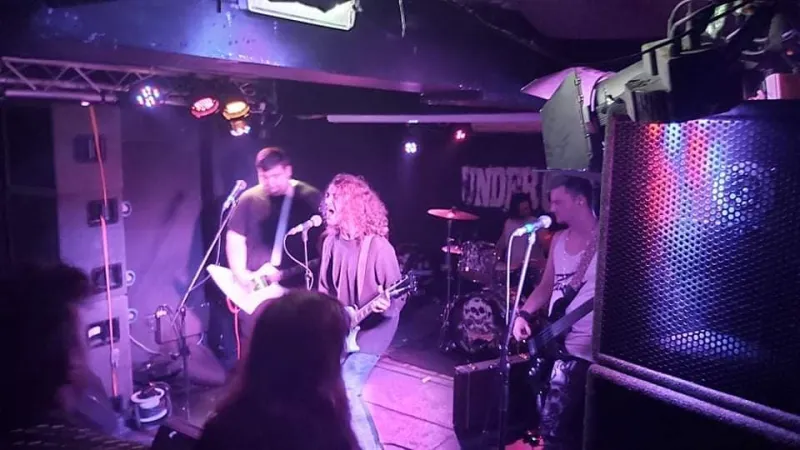
Photo: PuddleOfBleach, CC BY-SA 4.0, via Wikimedia Commons
There’s a particular kind of Friday night in the UK underground. You walk into a room above a pub, a church hall, or a scrappy DIY space, and you already know half the people there. Not because the scene is healthy and close-knit, but because the bill has been assembled from the same narrow drawer as last month’s. Punk with punk. Metal with metal. Noise tucked into its own corner, usually with the same three bands and the same forty people. It’s not that the bands are bad. It’s that the booking has become a border.
In 2026, with venues under pressure and costs still biting, the underground can’t afford to keep running on repeat. Cross-genre bills aren’t a magic fix, and they aren’t about forcing a happy-clappy united scene where everyone holds hands during the encore. They’re a practical way to make nights feel like events again, to widen the door without losing what makes the room worth standing in.
The “Not Our Crowd” Problem
“Not our crowd” is one of the most self-defeating phrases in the UK underground. It sounds like quality control. Usually it’s just habit wearing a leather jacket. It means: we haven’t invited them, we haven’t played with them, we haven’t explained the night in a way that makes them feel welcome, and we’ve decided in advance that they won’t get it.
There’s a legitimate concern underneath it. Regulars keep a scene alive. They buy the tickets when the bill is thin, they stick around for the last band, they put money in the merch jar. Promoters don’t want to alienate them by turning a trusted night into a random genre lottery. Fair enough. But there’s a difference between respecting a regular crowd and designing every bill so it asks nothing of them.
Audiences are not as fragile as promoters sometimes think. A hardcore kid can handle a noise rock set. A post-punk regular can survive twenty minutes of black metal if the bill is sequenced with care. The phrase “not our crowd” often just means “we haven’t done the work yet”.
A Bill Is a Conversation, Not a Taxonomy
Genre labels are useful for record shops and streaming algorithms. They’re less useful for building a night. A bill works when it has a shape: tension and release, contrast and common ground, a reason for each band to be in the room beyond a shared tag.
That doesn’t mean throwing darts at a genre map. It means thinking about intensity, texture, volume, and attitude. Hardcore and noise rock share a physical urgency; a bill that pairs them can feel like one long argument rather than two separate gigs. Black metal and post-punk can meet in atmosphere, in cold melody, in the way both can make a small room feel cavernous. Grind and synth punk can bounce off each other’s speed and spite. Even folk or ambient can work if the promoter is honest about the transition and the room is set up for it.
The key is not to treat the unfamiliar band as a novelty support act. Don’t put them on at 7:30pm to an empty room and call it crossover. Give them a real slot, a proper soundcheck, and a promoter who can explain why they’re there. The bill should feel intentional, not like a dare.
How to Mix Without Losing the Room
Cross-genre booking fails when it’s done lazily. It works when it’s done like a normal gig with a bit more thought.
Start with one unfamiliar act per night, not three. Let the regulars settle into the evening before asking them to stretch. Sequence the bill so the shift feels natural: don’t follow a melodic post-punk band with the most abrasive act on the planet unless you want people at the bar. Use a local opener who can bridge the gap. Write listings that tell people what to expect without writing a dissertation. “For fans of” is fine; “if you only like one thing, stay home” is not.
Talk to the bands. Ask them who they’d like to play with, who they think would get it, who they’ve never shared a stage with but want to. Talk to the regulars too, not as a focus group but as people. If someone says they’re not into a certain genre, ask why. Sometimes it’s a misconception; sometimes it’s just taste. Either way, you learn something.
And be transparent about money. Mixed bills can bring in new people, but they can also cost more in promotion and travel. Keep door splits clear, don’t promise what you can’t deliver, and don’t make the unfamiliar band feel like they’re there to tick a box. If the night is a fundraiser or a label showcase, say so. The underground runs on trust, and trust is easier to keep when the maths are visible.
The Regulars Aren’t the Enemy
The fear of alienating the core crowd is real, but it’s often overstated. Regulars don’t need to be protected from new things; they need to be respected enough to be told what’s happening. A good promoter doesn’t water down the bill. They frame it.
There’s also a bigger point. The UK underground is not a members’ club. It’s a loose network of people who care enough to turn up. If the same fifty faces are in every room, that’s not a sign of purity. It’s a sign that the door is narrower than it needs to be. Cross-genre bills won’t fix every problem — lazy promotion, poor accessibility, last trains, rising costs — but they can make the scene less predictable and more alive.
What 2026 Could Look Like
Imagine a night in Leeds where a post-punk band opens for a black metal act, and the room stays for both because the promoter booked the transition like a DJ set. Imagine a Bristol hardcore gig with a noise rock mid-bill that makes the headliner feel heavier by contrast. Imagine a Glasgow basement where synth punk and grind share a stage and nobody calls it a gimmick. None of this is radical. It’s just booking with a bit of nerve.
The underground is loud enough to hold more than one frequency. The bill doesn’t have to be a border. Mix it, sequence it, explain it, and let the room decide. If the scene is going to survive 2026, it needs more than the same fifty faces and the same five bands. It needs a few nights that make people say, “I didn’t know I liked that.”